

India, officially Known as ‘Republic of India’ (in Hindi known as Bharat or Hindustan), is the seventh largest and second most populous country in the world. India is vast and has a huge population of 1 billion. At times it can feels as if the whole population is in the same place at the same time as you! You will become fascinated with India, its cultures, its people, and the continuous stream of activity going on around you.
India is bordered on the north by Pakistan, China, Nepal, and Bhutan; on the east by Bangladesh, Myanmar (formerly known as Burma), and the Bay of Bengal; on the south by the Palk Strait and the Gulf of Mannar (which separates it from India) and the Indian Ocean; and on the west by the Arabian Sea and Pakistan. At one point, ‘Lands End’ at Kanyakumari, three seas meet - the Indian Ocean, the Arabian Sea and the Bay of Bengal.
The sights, sounds, and scenery of India are unique and amazing with grandiose temples, lush paddy fields and stunning beaches. In the north, Shrub-land and desert create a sublime backdrop and a visit to the ‘Golden Triangle’ (Delhi/Agra/Jaipur/Delhi) will take your breathe away. It is divided into 26 states and 6 union territories, and has 17 major languages with 844 dialects, making this country and its people culturally diverse. Religion plays an important role in the life of the country, and is one of the few countries in the world which have such an ancient and diverse culture. Their arts and crafts are world renowned with sport being one of their favorite past times, and cricket still acting as one of the most popular activities.
SOUTH INDIA:
In the south you can explore quaint waterways, beautiful sandy beaches, and meander through forests and coconut groves. There are also the famous, awe-inspiring temples at Madurai (where the southern placements are situated) which should not be missed! And for a bit of cool relief, you can catch 'toy trains' to different hill stations such as Kodaikanal, which are dotted around this region.
Madurai or as it is known – the "city of nectar", is the oldest and second largest city within the state of Tamil Nadu. The city is located on Vaigai River and was the capital of Pandyan rulers till the 14th century. It is full of cultural diversity - a bustling city with plenty of activities going on. The Sri Meenakshi Sundareswarar temple is the centre of attraction for the town; with its mass of religious activities, and its surroundings of tailors and tourist shops to attract the big spenders. If you are after an overwhelming experience, then Madurai is a certainty for this!
Also, on the South- Eastern peninsular, The Maharajah's Palace near Mysore is stunning and a must-see place. The Palace is set in its own walled grounds, about the size of a small town, with a temple in each corner, complete with intricately carved towers. Inside the palace the rooms are beautiful, Moorish and neo-Saracenic, the scale is magnificent. Arched and vaulted with carvings everywhere, and the main reception area, facing south has beautiful painted ceilings and is open to the parade ground outside.
NORTH INDIA:
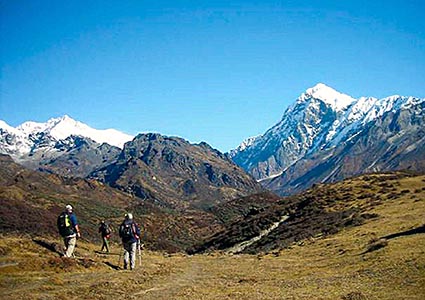
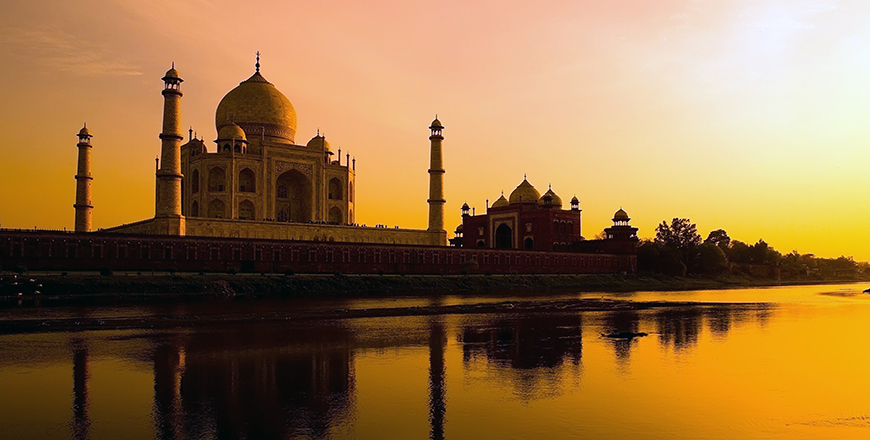
In the north you can trek in the foothills of the Himalayas, take boat trips on the Ganges River, stroll through forests and plantations. And you can't miss the Taj Mahal. There is something to suit everyone.
Delhi is culturally beautiful, and above all a historic city. Old Delhi contrasts with the formal New Delhi, whose wide boulevards are mesmerizing. The city is full of energy and colour, and bustles to live with its’ bazaars and Moghul architecture. It is a busy and bustling city, yet still retains a unique charm and elegant nature.
HIMANCHAL PRADESH:
This mountain state in northern India has what few other states have a kaleidoscope panorama of wealth; of mighty snowy peaks and enchanting evergreen glades, bubbling streams and misty forests, lakes, meadows and cultivated hillscapes. Situated in the trans Himalayan region of Lahaul and Spiti, it is a land of contrasts. To its north are the barren rocks and raging torrents of the twin valleys of Lahaul and Spiti. Kulu and Manali are different, bountiful orchard country; the valleys of Kangra are rich croplands. High points for the visitors include Simla, Kullu, Manali, Rohtang Pass. The Kullu valley is one of the most beautiful, with lush green forests and Beas River running through it. From Manali, the trip along the spectacular mountain road to Leh via Rohtang, Keylong, Pang is breathtaking, and takes one across the second highest vehicular pass in the world at a height over 5500 m. Dharamsala, famous for settlement of Dalai Lama, lies on the foothills of Dhauladhar mountain which flanks the valley. Himachal's valleys - Simla; Chamba; Kangra, Kullu, Kinnaur, Spiti & Lahaul are the trasure hunt, each famous for its tradition, landscape, culture, temples, people and art. Charming, tolerant, guileless, and scrupulously honest are the people of Himachal that make an indelible impression on visitors. The majority of the population is of aryan stock and are devout Hindus, there is ample representation of Buddhism, especially in the north, and Islam. The people of Lahaul-Spiti are of Mongol stock, and display the facial features associated with the east.
JAMMU KASHMIR:
The Kashmir, northernmost state of India, which comprises of three district geographical regions, three main languages and three religions. One of these regions, Ladakh, is a high altitutde desert with temperatures sinking to minus 40 degrees Celsius in winter. The other, Kashmir, is the legendary valley touched with such benediction that poets have showered hyperbolic adjectives on it. It has snow in winter and bring, mild sunshine from April to November. And finally there is Jammu, climatically very much like the plains of northern India.
Ladakh the northern frontier of India, where Afghanistan, Pakistan and China meet, is an area of high altitutdes, glaciers, streams and charming valleys hidden among some of the tallest mountains in the world-the karakoram range. The journey by road from Srinagar over the Zoji la (Pass) climbing unaccustomed heights, traverses cold, grey crags and boulders, and vast yellow desert-like plains. Situated on the western end of the Himalayas, Ladakh has four major mountain ranges - the Greeat Himalayan Zanskar, Ladakh and the Karakoram - passing through it. A maze of enormously high snow capped peaks and the largest glaciers outside the polar region, the Siachen, dominate the terrain where valley heights range from a mere 8000 feet to 15000 feet while passes of upto 20000 feet and peaks reaching over 25000 feet can be seen all around. The main land approach to Ladakh is the 434 km Srinagar-Leh highway. For most part, this road follows the historic trade route, thus giving travellers a glimpse of villages that are historically and culturally important. The most dramatic part of the road journey to Kargil is the ascent up the Zoji-La, the pass in the Great Himalayan Range that serves as the gateway to Ladakh.
Manali-Leh; once restricted route, opened to the tourists a few years ago, now takes one across high Himalayan passes and two extensive plains resembling the Praries of Russia and America. From Manali, to the crest of the Rohtang Pass (13050 ft), providing a grandstand view of Lahaul to the junction of the route going east to Spiti over the Kunzum Pass to Keylong. After passing through Keylong (3350 m)the route follows via Jispa (3142 m), Baralacha Pass (4892 m), Sarchu (4253 m), Lachalunga la (5065 m), Tanglang-la (5360 m) Leh (3524 m), 434 kms. Ladakh offers a wide range of cultural and adventure tours. Ancient monasteries, stupas, gompas, murals there are many other options for visiting Tribal Helmets of Dha-Hanu to valleys of Pangong, Tso Moriri, Nubra or for treks to Lamayuru, Markha, Zanskar. Open to the tourists from June till October, Leh can be reached by air from Delhi, Chandigarh, Srinagar, Jammu or by road from Srinagar and Manali.
RAJASTHAN:
Rajasthan is a dry and rugged environment, but one of the most beautiful settings in the world. With the Aravalli Hills (one of the oldest mountain systems in the world) splitting through the heart of the country, stretching from Mount Abu in the southwest to Kota and Bubdi in the east, it is a wondrous place. The capital of Rajasthan is the excellent and colourful state of Jaipur, founded by Raja Jai Singh II. It is part of the ’Golden triangle’ of Delhi-Jaipur-Agra’, and offers some magnificent buildings, and architecture. The Old City has a very enticing atmosphere, with its bazaars and palaces.
Republic of India
National name: Bharat
President:A.P.J. Abdul Kalam (2002)
Prime Minister:Manmohan Singh (2004)
Land area:1,147,949 sq mi (2,973,190 sq km); total area: 1,269,346 sq mi (3,287,590 sq km)
Population (2006 est.): 1,095,351,995 (growth rate: 1.4%); birth rate: 22.0/1000; infant mortality rate: 54.6/1000; life
Expectancy: 64.7; density per sq mi: 954
Capital (2003 est.): New Delhi, 17,037,900 (metro. area), 10,203,700 (city proper)
Monetary unit: Rupee
Principal languages: Hindi (official), English (official), Bengali, Gujarati, Kashmiri, Malayalam, Marathi, Oriya, Punjabi, Tamil, Telugu, Urdu, Kannada, Assamese, Sanskrit, Sindhi (all recognized by the constitution). Dialects, 1,600+
Ethnicity/race: Indo-Aryan 72%, Dravidian 25%, Mongoloid and other 3% (2000)
Religions: Hindu 81.3%, Islam 12%, Christian 2.3%, Sikh 1.9%, other (including Buddhists, Jains, and Parsis) 2.5%
Literacy rate: 60% (2003 est.)
Economic summary: GDP/PPP (2005 est.): $3.699 trillion; per capita $3,400.